
Adaptive short-course learning for speed, relevance, and confidence
Product design proposal to make required learning faster and more relevant while targeting a CSAT lift from 75% to 90%.
Market opportunity
In this category, employees often feel required training is repetitive and generic. They want to move faster through topics they already know and focus on what is relevant to their role and context.
Learning and business teams face the opposite pressure: they need evidence that people actually understand key material, not just that a course was completed.
Product value proposition
Realizeit's promise in this proposal is adaptive personalization at scale: let learners accelerate where knowledge is demonstrated, deliver context-relevant content, and use targeted checks with remediation where gaps appear.
The direction balances both sides of the problem: faster, more relevant completion for learners and higher confidence in understanding for outcomes owners.
Role
Product Designer
Created with
Cue Studio
Deliverables
UX Research
Concept
UX Design
UI Design
Prototyping
Selected screens
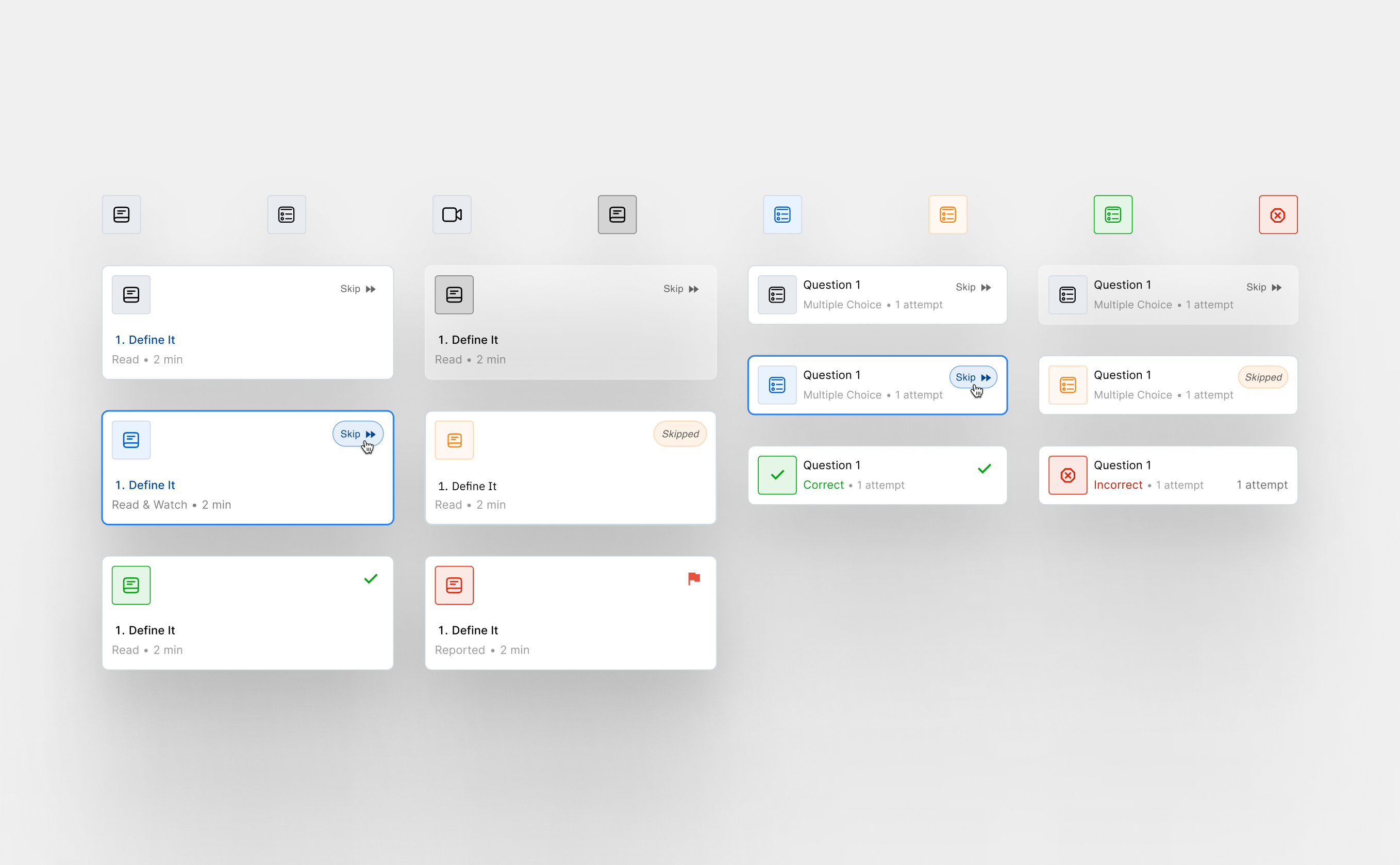
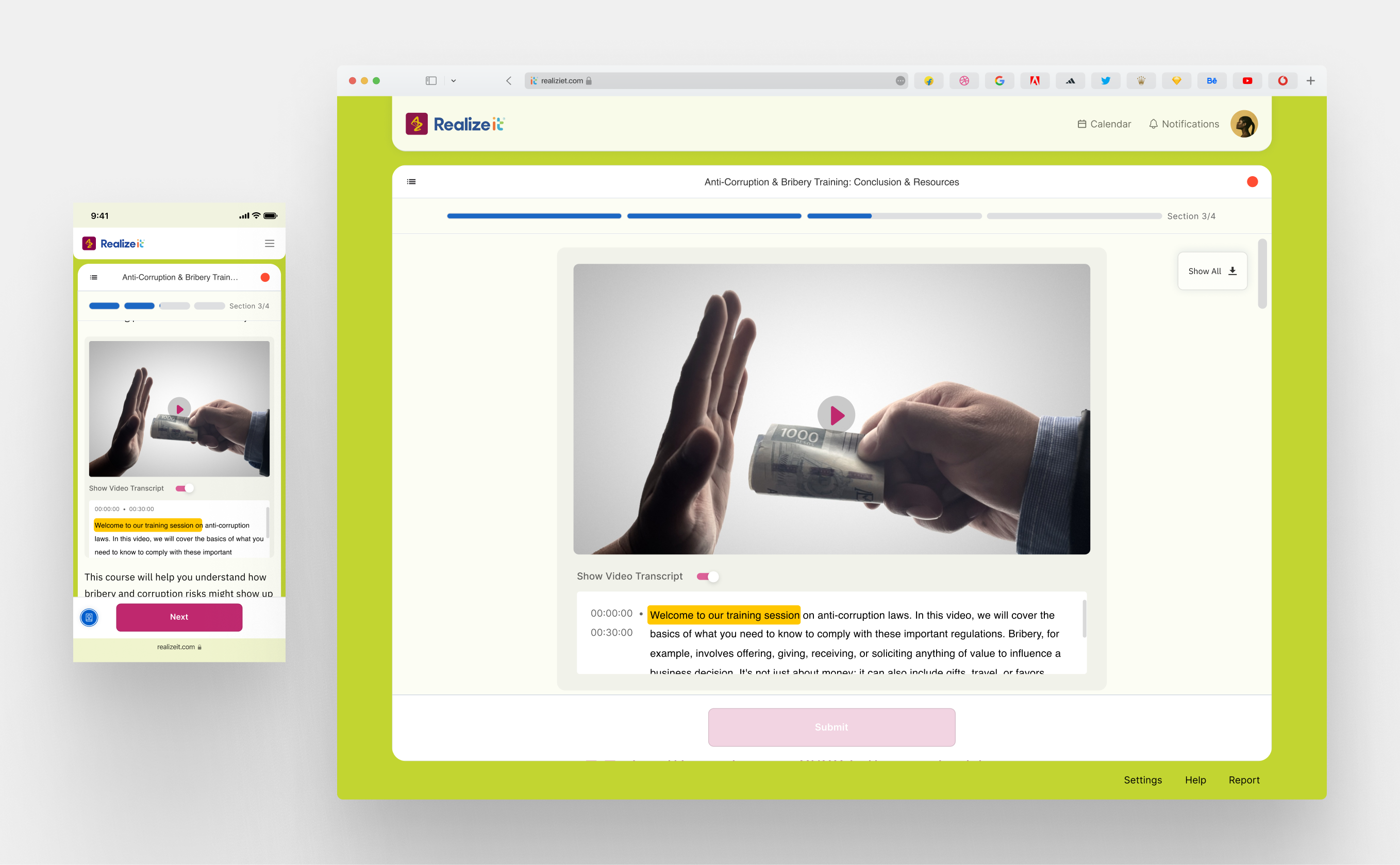
Three concept visuals used to validate component states, video-plus-transcript learning flow, and white-label adaptability.

Interaction clips
Four clips showcasing quiz feedback states, tabbed progression behavior, and white-label flexibility in the same short-course framework.
Closing
This proposal focused on making required learning faster and more relevant for employees while improving confidence in understanding for organizations.
For more details on the strategy and proposed experience direction, feel free to reach out.